
Why Stone-Ground Matters: How We Mill Our Corn at McEwen & Sons
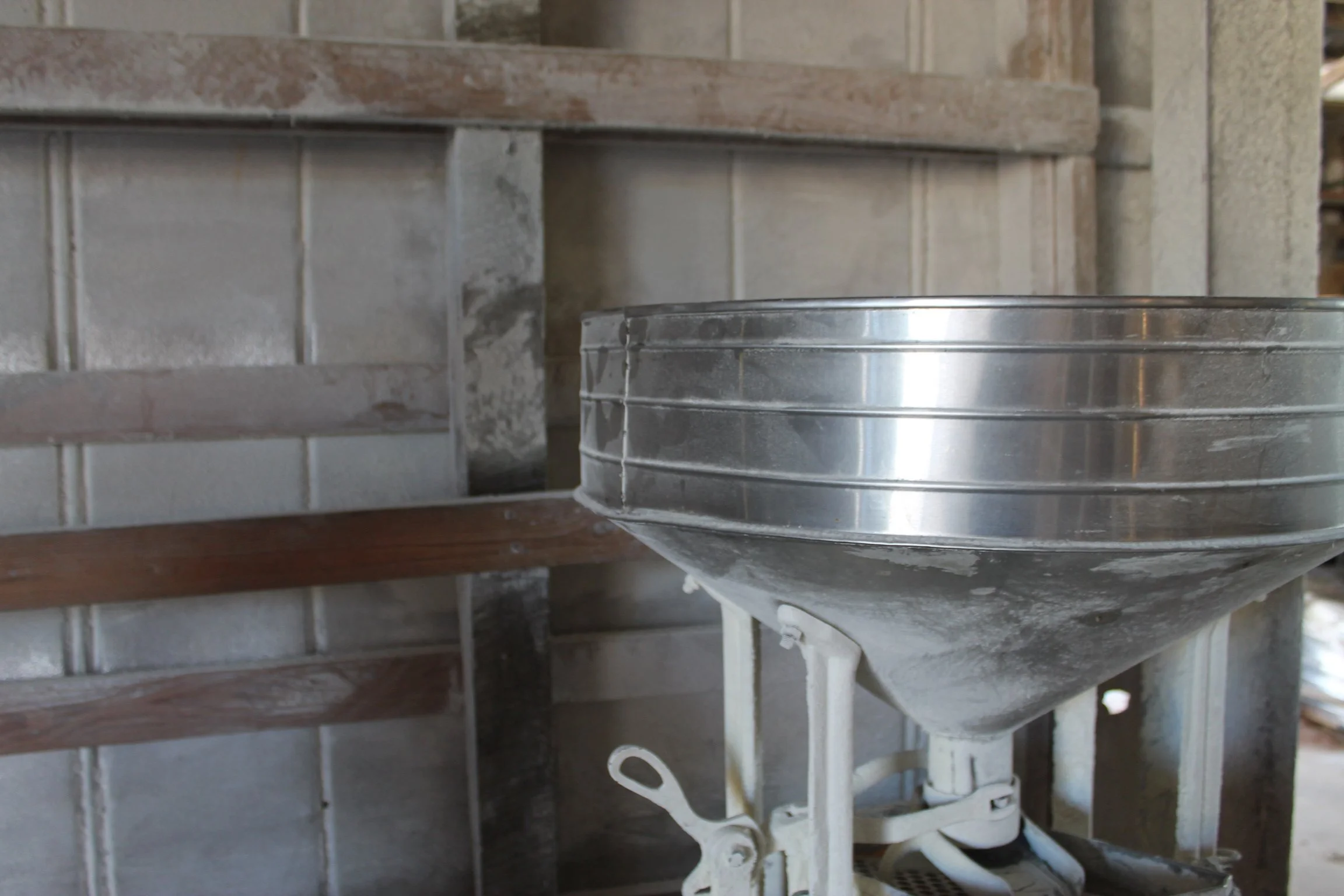
Stone-ground grits and cornmeal are becoming harder to find. At McEwen & Sons, that's exactly why we still make them the old-fashioned way. Walk into our mill in Wilsonville, Alabama, and you'll find something that has become increasingly uncommon in modern food production: a working stone-burr gristmill. While much of today's commercial grain milling relies on high-speed steel rollers and other modern equipment, our corn is slowly ground between two large stones. It's an old-fashioned process. And we believe it's worth preserving.
What Does "Stone-Ground" Mean?
At its simplest, stone-ground means exactly what it sounds like: the grain is ground between stones. Our stone-burr gristmill uses two large stones to gradually crush and grind whole kernels of corn. The stones don't simply pulverize the corn in one quick pass. Instead, the kernels are progressively reduced into the grind we're looking for, allowing us to produce stone-ground grits and cornmeal with the texture and character we're after.
The result is a product that looks, cooks, and tastes different from more highly processed corn products. Stone-ground grits are generally coarser and have a more pronounced corn flavor than quick or instant grits. And that's part of the reason we still do it this way.
How Our Stone-Burr Gristmill Works
Traditional gristmills were often powered by water. In fact, water-powered mills were once an important part of communities throughout the South and elsewhere in America. The development of water-powered milling allowed millstones to do the work that previously required human or animal power.
Our mill has the same basic principle at its heart, but our mill is powered by electricity. The power source may be modern, but the fundamental milling process remains traditional. The corn enters the mill and is ground between the stones. The miller controls the process to achieve the desired grind, paying attention to factors such as the texture and consistency of the finished product. That combination of old-fashioned milling and modern reliability is what allows us to continue producing our grits and cornmeal today.
What Happens to the Corn During Stone Milling?
A whole kernel of corn contains several major components, including the bran, germ, and endosperm. When whole-grain corn is stone-ground, those components remain part of the resulting meal or grits rather than being separated out as part of a degermination process. The germ contains much of the corn kernel's oil and contributes to the flavor and keeping qualities of whole-ground corn. It's also one reason stone-ground products require more careful storage.
The natural oils in the germ can cause whole-grain corn products to become rancid more quickly than highly refined products. For that reason, we recommend following the storage instructions on your particular McEwen & Sons product and keeping whole-grain stone-ground products properly protected from heat and moisture by refrigeration.
Stone-Ground vs. Commercially Milled Corn
So what's actually different? The biggest difference is how much of the kernel remains in the finished product and how the grain is processed. Modern commercial milling can involve high-speed rollers, hammer mills, degermination, and sifting processes designed to produce very consistent products efficiently and at large volumes.
Stone milling takes a different approach. The goal isn't simply to process as much corn as possible as quickly as possible. It's to carefully grind the corn into a useful, flavorful product while retaining the character of the whole kernel. And that difference can be noticeable in the finished grits or cornmeal.
Why Do Stone-Ground Grits Taste Different?
One of the first things you'll notice about stone-ground grits is that they actually taste like corn. That's partly because stone-ground grits are typically coarser and retain the germ, giving them a more pronounced flavor than more highly processed varieties. The variety of corn matters, too. White corn, yellow corn, blue corn, and red corn can all produce grits with different colors and flavor characteristics.
That's why two bowls of grits can look and taste surprisingly different even when they're prepared using the same recipe. At McEwen & Sons, we mill several different kinds of corn because we believe the corn itself should be part of the experience.
Why Do Stone-Ground Grits Take Longer to Cook?
If you've cooked quick grits before, don't expect stone-ground grits to behave the same way. Stone-ground grits are generally coarser, meaning they need more time to absorb liquid and become tender. A typical preparation may take 20-40 minutes or longer, depending on the particular grind and recipe. That isn't a flaw. It's part of the process.
Stone-ground grits reward patience. Cook them slowly. Stir them regularly. Give the corn time to soften. The result is a creamy bowl of grits with a texture and corn flavor that quick-cooking products simply don't replicate in the same way.
Why Do Stone-Ground Grits Need to Be Refrigerated or Frozen?
Here's something that surprises people who are accustomed to highly processed corn products: Whole-grain stone-ground grits are more perishable. That's because the germ remains in the product, including its natural oils. As a result, stone-ground whole grains generally have a shorter shelf life at room temperature than products in which the germ has been removed.
So if you aren't going to use your grits quickly, refrigeration or freezing is a good way to help maintain freshness. Always follow the specific storage instructions provided with your McEwen & Sons product.
Stone Milling Is Part Science, Part Craft
There's more to stone milling than simply putting corn between two stones. A good miller has to pay attention to the corn, the grind, and the finished product. The miller is responsible for producing a consistent grind while maintaining the characteristics we're looking for in the meal or grits.
That's where experience matters. Stone milling is both a process and a craft. The stones may be doing the grinding, but the miller is still responsible for understanding what's happening inside the mill and making adjustments when necessary. That’s what McEwen & Sons is best at.
Why We Still Stone-Grind Our Corn
We could choose a faster way. But faster isn't necessarily what we're after. We want to make grits and cornmeal that have character. We want the corn to taste like corn. We want the texture of a traditionally milled product. And we want to continue a milling tradition that has been part of Southern food culture for generations.
That's why, at McEwen & Sons, we still put corn between stones. Not because it's the easiest way to mill corn. Because we believe it's the only way to make a product we are proud of. Frank Stitt, multi-time James Beard Foundation Award winner from Birmingham, Alabama, said it best, “The McEwens reinvented grits, which was a special mission in the South, because like a lot of Southern food, the life had been processed out of them."
From Our Mill to Your Table
Whether you're making a pot of creamy stone-ground grits for breakfast, cooking shrimp and grits for dinner, baking cornbread, or serving a big bowl of grits at a fall tailgate, the process starts with the same thing: Good corn. And how that corn is milled matters.
At McEwen & Sons, we stone-grind our corn in Wilsonville, Alabama, using a traditional stone-burr milling process that gives our grits and cornmeal their distinctive texture, flavor, and character. It's an old-fashioned process in a modern world. And we're proud to keep it going. Slowly ground. Stone by stone. Made in Alabama.
Frequently Asked Questions About Stone-Ground Grits & Milling
What are stone-ground grits?
Stone-ground grits are made by grinding corn between stones. They are generally coarser than quick or instant grits and typically retain the germ, giving them a more pronounced corn flavor and heartier texture.
What is a stone-burr gristmill?
A stone-burr gristmill is a mill that uses two stones, known as burr stones, to grind grain. The stones rotate against one another to progressively grind the grain into meal, flour, or grits.
Why do stone-ground grits take longer to cook?
Their coarser grind means the corn takes longer to absorb liquid and become tender. Stone-ground grits commonly take substantially longer to cook than quick or instant grits.
Why do stone-ground grits taste different?
Stone-ground grits generally have a coarser texture and more pronounced corn flavor, in part because the germ is retained. The variety of corn used also contributes to the final flavor and color.
How should stone-ground grits be stored?
Because whole-grain stone-ground products retain the germ and its natural oils, they are more perishable than highly refined products. For longer storage, refrigeration or freezing is recommended.
Are stone-ground grits the same as instant grits?
No. Stone-ground grits are coarsely ground and require substantially more cooking time. Instant grits are precooked and dehydrated so they can be prepared quickly.
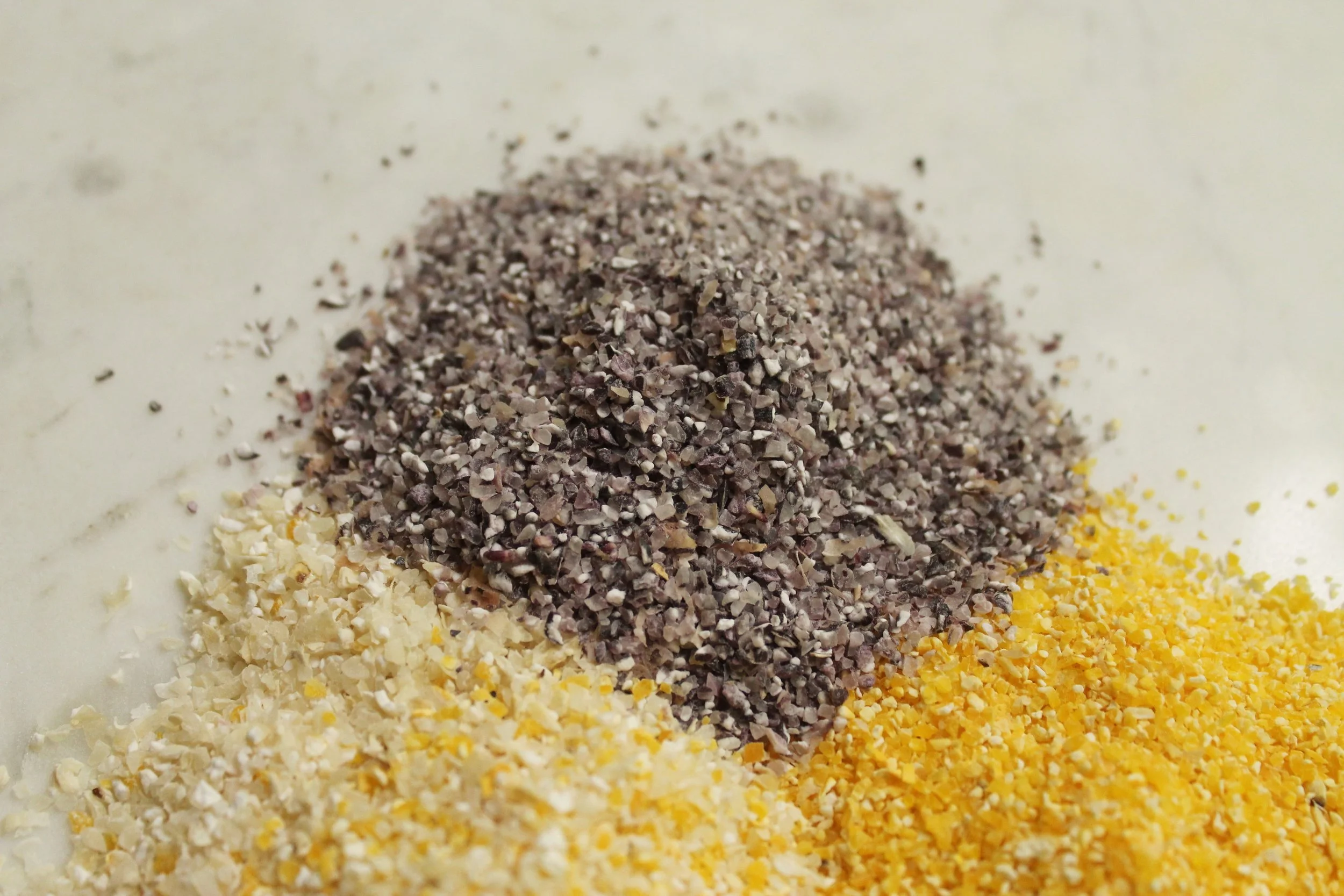
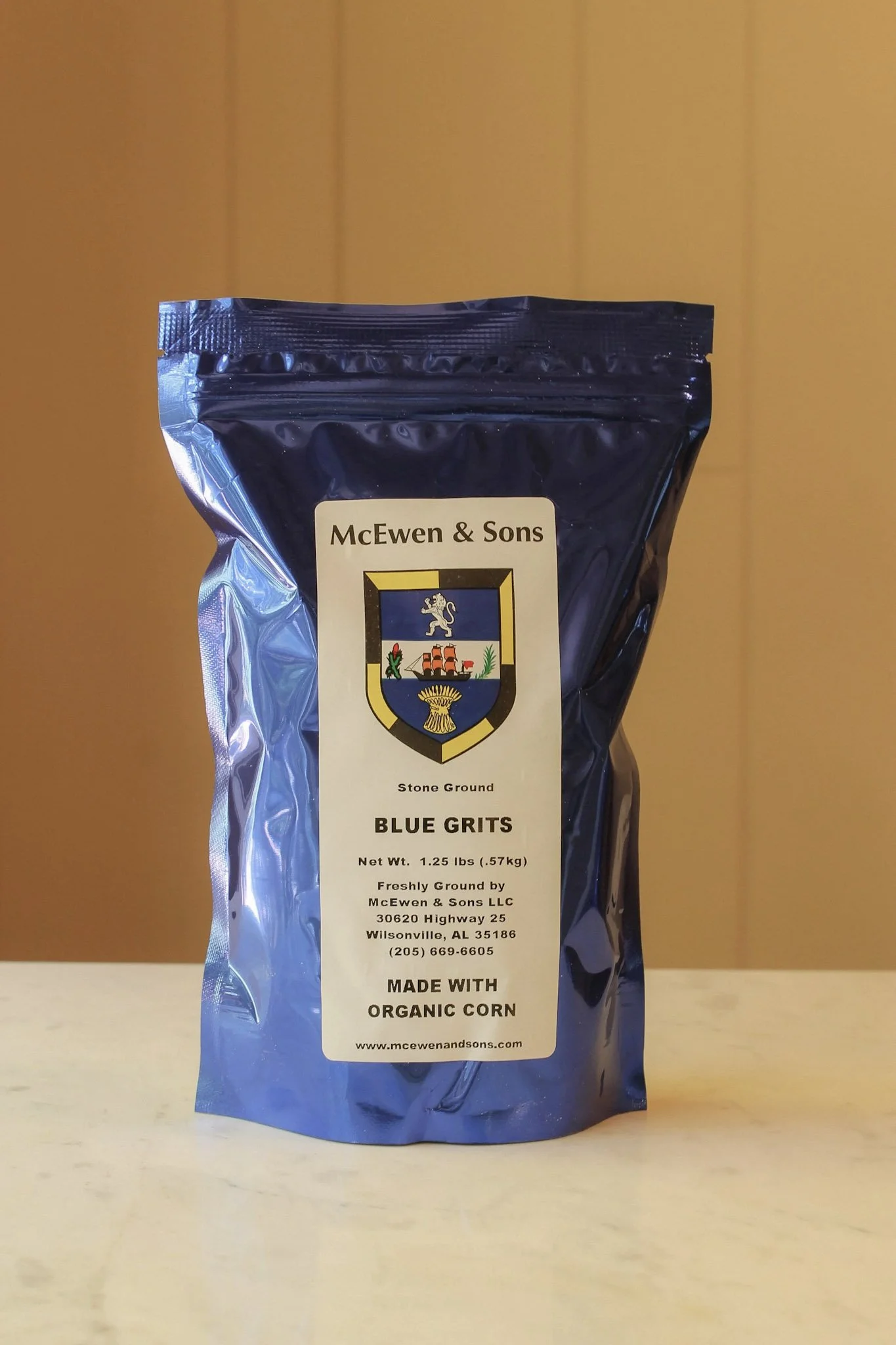
Our Stone-Ground Blue Grits are milled in small batches using certified organic blue corn, producing a rich, earthy flavor and striking natural color. Blue corn is known for its deeper, nuttier taste compared to white or yellow corn, offering a slightly sweet, robust flavor with a satisfying whole-grain heartiness. These grits create a beautifully textured dish that stands out on the plate and brings a Southwestern twist to classic Southern cooking. Ideal for chefs, food lovers, and anyone looking to try something new.
